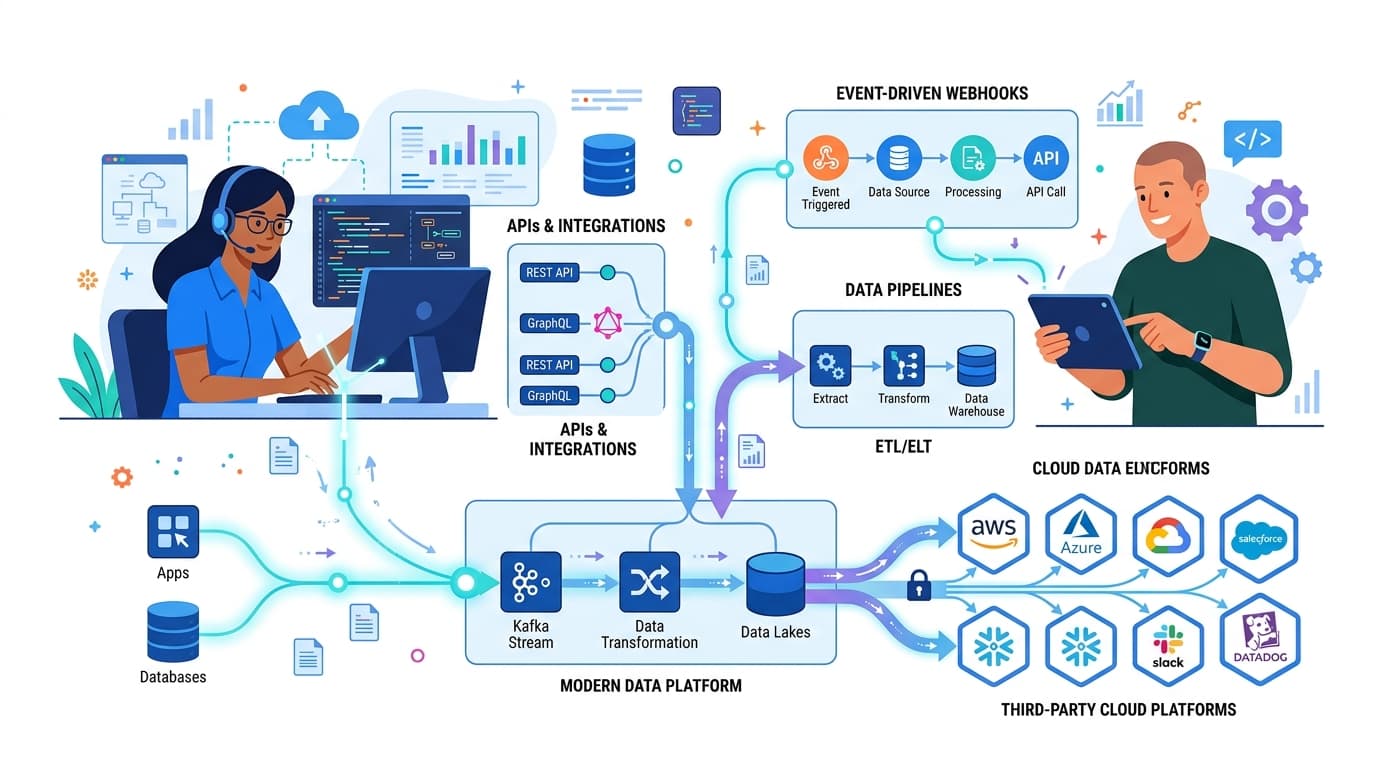
Modern business operations depend on an ecosystem of specialized external tools: payment gateways (Stripe, Razorpay), CRM platforms (HubSpot, Salesforce), shipping APIs, and ERP systems. However, relying on external services introduces distributed systems complexity: third-party servers go down, network sockets drop, and rate limits are hit without warning.
If your application relies on synchronous HTTP calls in the main request cycle, your system's uptime will never exceed the uptime of your least reliable integration.
Architecting for Resilient Interoperability
1. Asynchronous Event Queuing
When an external event occurs — such as an incoming payment or customer onboarding trigger — the primary application must never perform heavy external API synchronization during the active user request. Instead, we persist incoming payloads immediately to an internal event log, acknowledge receipt within 50ms, and offload processing to background worker queues.
2. Idempotent Webhook Processing
Network instability means third-party platforms will inevitably retry webhooks multiple times. If your webhook handler is not idempotent, a network retry can charge a customer twice or issue duplicate inventory orders. We implement deterministic idempotency keys and state checks, guaranteeing that an event processed ten times produces the exact same outcome as an event processed once.
3. Exponential Backoff and Dead-Letter Queues
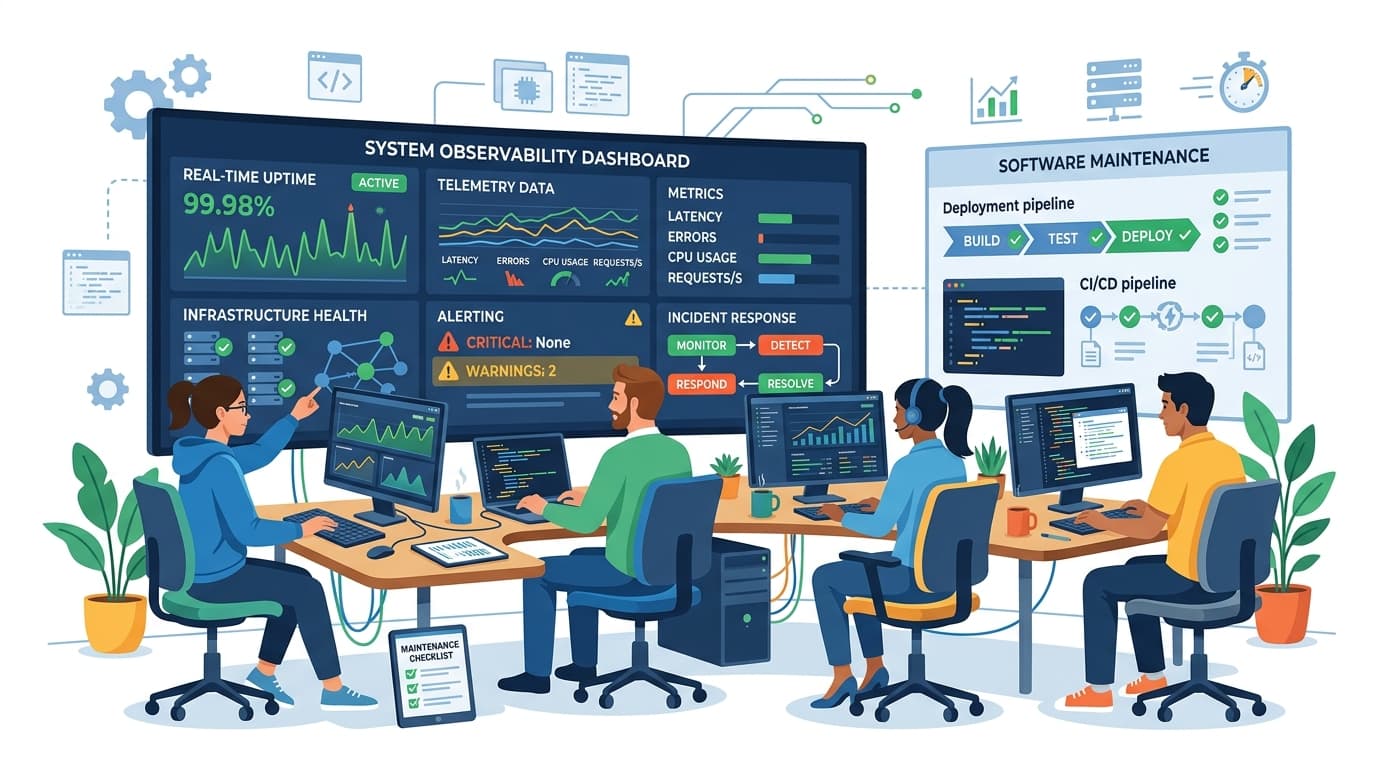
When communicating with external APIs, transient network failures must be met with exponential backoff and jitter. If an external service is completely unresponsive after predetermined retry attempts, failed events are quarantined into a Dead-Letter Queue (DLQ). Engineering teams receive instant alerts with complete execution payloads, allowing one-click replay once the external vendor recovers.
4. Reconciled Data Synchronization
Data drift between disparate systems is inevitable over time. We engineer automated reconciliation cron jobs that audit record states across internal databases and external platforms nightly, identifying and repairing discrepancies before business stakeholders notice.